
Find your own female narrative tools
A foundational course for women beginning to resist traditional forms
A 6-week writing journey to reconnect with your voice and find your own form.
Learn to trust your material and express yourself authentically.
Identify and release internalized censorship to unleash your creativity.
Stop seeking approval and start writing from a place of feminine difference.
Find Your Own Female Narrative Tools: Empowering Female Fiction Writers
This course is designed for beginner female fiction writers who feel blocked by internalized censorship, fear of rejection, and anxiety about their unpublished work. By addressing pagefright and writer's block linked to cultural repression and gendered expectations, this course aims to help you unleash your creativity and write from your own embodied truth.
Course Curriculum
A woman artist makes her own pattern
A message from the instructor
How to use this course
Before we begin...
Time to introduce yourself
0:1- Narrative, narratology
0:2 - Feminine forms of fiction
0:3 - Woolf's first experiments: An unwritten novel
0:4 - Woolf's 'content' and 'form'
0:5 - ''The proper stuff of fiction'
About this module
1:1 - Experimenting with narration
1:2 - Male writers' 'single, authoritative storyteller'
1:3 - Female writers' alternatives
1:4 - Woolf teaches narration
EXAMPLE: Dorothy Richardson's narration
EXAMPLE: Virginia Woolf's narration
EXAMPLE: Anaïs Nin's narration (introductory)
EXAMPLE: Anaïs Nin's narration (advanced)
EXAMPLE: Kathy Acker's narration
Modernism: As a movement open to the "feminine"
About this module
2:1 - Experimenting with focalization
2:2 - Male writers' single point of view
2:3 - Female writers' alternatives
2:4 - Woolf teaches focalization
EXAMPLE: Dorothy Richardson's focalization
EXAMPLE: Virginia Woolf's focalization
EXAMPLE: Jean Rhys' focalization
EXAMPLE: Anaïs Nin's focalization
About this module
3:1 - Experimenting with characterization
3:2 - Male writers' 'well-motivated characters'
3:2 - Female writers alternatives
3:3 - Virginia Woolf teaches characterization
EXAMPLE: Virginia Woolf's characterization
EXAMPLE: Anaïs Nin's characterization
EXAMPLE: Djuna Barnes' characterization
EXAMPLE: Nathalie Sarraute's characterization
About this module
4:1 - Experimenting with time
4:2 - Male writers' plot linearity
4:3 - Female writers alternatives
EXAMPLE: Gertrude Stein's time
EXAMPLE: Virginia Woolf's time
EXAMPLE: Anäis Nin's time
EXAMPLE: Kathy Acker's time (1)
EXAMPLE: Kathy Acker's time (2)
EXAMPLE: Hélène Cixous' time
About this module
1:1 - The Open/The Closed
1:2 - Gertrude Stein and “The Rejection of Closure”
1: 3 - Kathy Acker and "Models of our present"
BONUS: Toolbox ref: narration
BONUS: Stream of consciousness in H.D.'s work
BONUS: Cixous' stream of consciousness*
BONUS: Steinian time in Woolf's work
BONUS: Steinian time in Cixous' work NEW*
BONUS: Working out with structures NEW*
Ready to Find Your Own Female Narrative Tools?
Join now and start your journey towards creative freedom.
Module 1 - Narration (who speaks?)
In this module, you will larn how to experiment with narration, but also learn from genius women writers' experiments.
Alternatives to the a single, authoritative storyteller
Module 2 - Focalization (who sees?)
In this module, you will learn how to experiment with focalization, but also learn from genius women writers' experiments.
This is closely connected to the previous module.
Module 3 - Characterization
In this module, you will learn how to experiment with characterization, but also leaarn from genius women writers' experiments.
Alternatives to the a single, authoritative storyteller
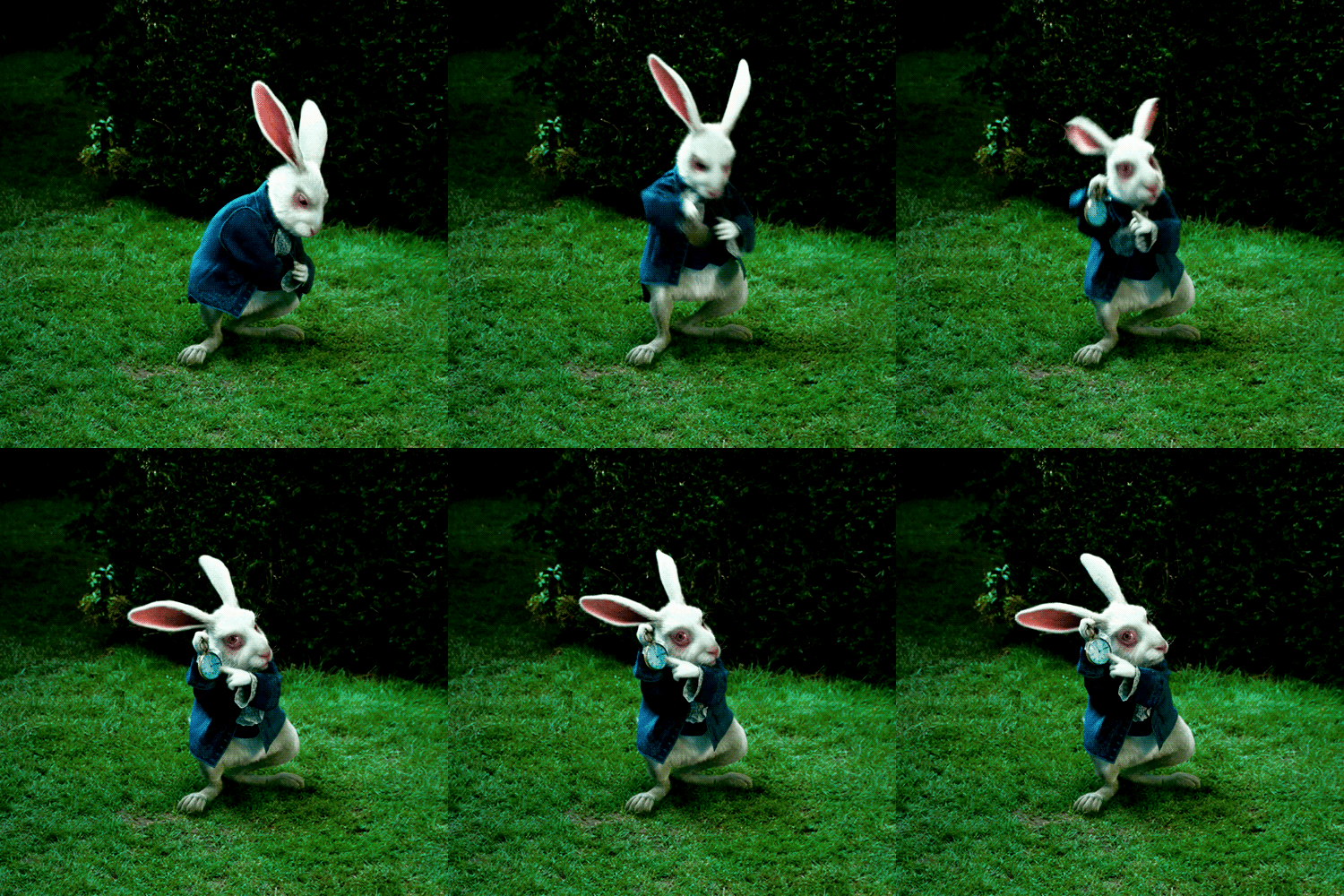
Module 4 - Time, structure
"A woman artist makes her own pattern."
In this module, you will learn how to experiment with time, but also learn from genius women writers' experiments.
Alternatives to the plot linearity that implies a story's purposeful forward movement
This module will change the way you approach life and writing.

Module 5 - Open/Closed
Closure in the traditional novel usually means that the heroine gets married, goes mad, or dies.
Alternatives to the traditional forward movement towards closure
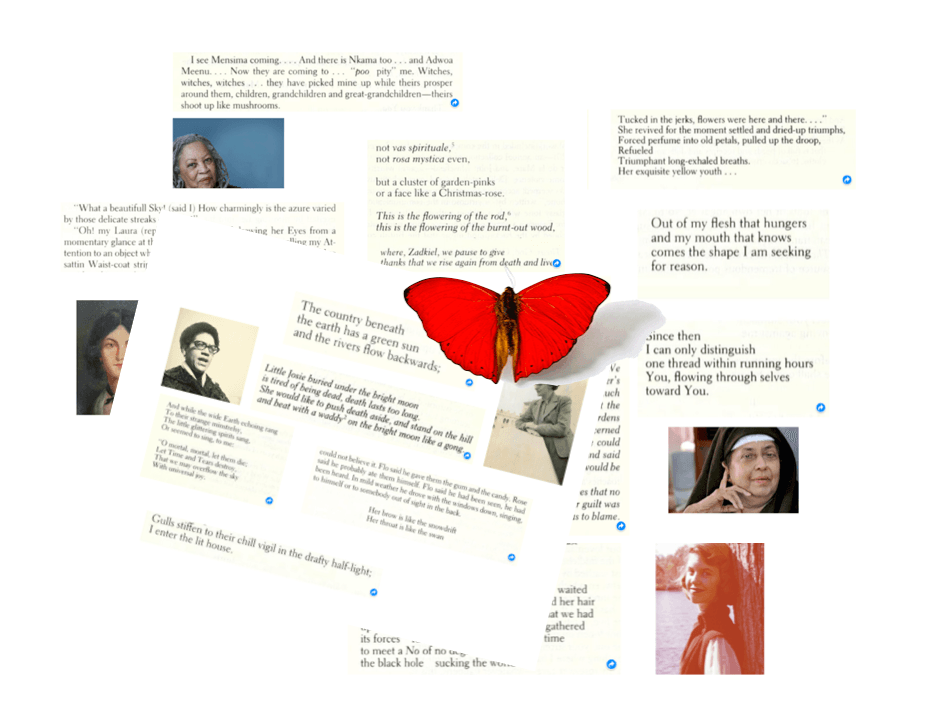
BONUS: Find your literary mothers - and sisters!
Everything you need to travel through women’s literature!
As part of this special offer, you will also get a guide to women's literature, so you can claim your feminist heritage and invent yourself as an artist!
Books continue each other”, Virginia Woolf reminds us in A Room of One´s Own, advising her readers to consider contemporary fiction by women “as if it were the last volume in a fairly long series”.
Discover Women's Literature from the Middle Ages and the Renaissance into Contemporary Literature, and the topics they wrote about (womanhood, gender stereotypes and patriarchal status quo).
Ready to Find Your Own Female Narrative Tools?
Join now and start your journey towards creative freedom.
© Mad Women Writers 2025